




Colorfastness Testing for Clothing: Washing, Rubbing and Buyer Requirements
Understand the difference between color change and staining, and define the colorfastness checks relevant to your garment order.
Colorfastness describes resistance to color change or transfer under a specified exposure. A garment can look correct when delivered and still transfer color during use or care. For buyers, a useful testing brief identifies the exposure, the material and the acceptance requirement—not simply a request for a 'colorfast certificate'.
Identify the exposure that matters
Washing, rubbing, perspiration and light are different exposures. Passing one assessment does not establish performance under all the others. Start with how the product will be worn and cared for. A dark tee worn against a light bag presents a different concern from a garment displayed in strong sunlight. Agree the relevant scope with a qualified testing provider.
Separate color change from staining
Color change concerns the tested material’s appearance; staining concerns transferred color on another material. Ask whether both are included in the report and which assessment scale is used. A result described only as 'good' is not enough to compare suppliers. Retain the method, conditions, ratings and agreed limits with the identified sample.
| Concern | Question for the test brief |
|---|---|
| Laundering | What care conditions and assessments are required? |
| Rubbing | Are both wet and dry conditions relevant? |
| Perspiration | Does the intended use require this exposure? |
| Light | What exposure and rating requirement apply? |
Treat wet and dry rubbing separately
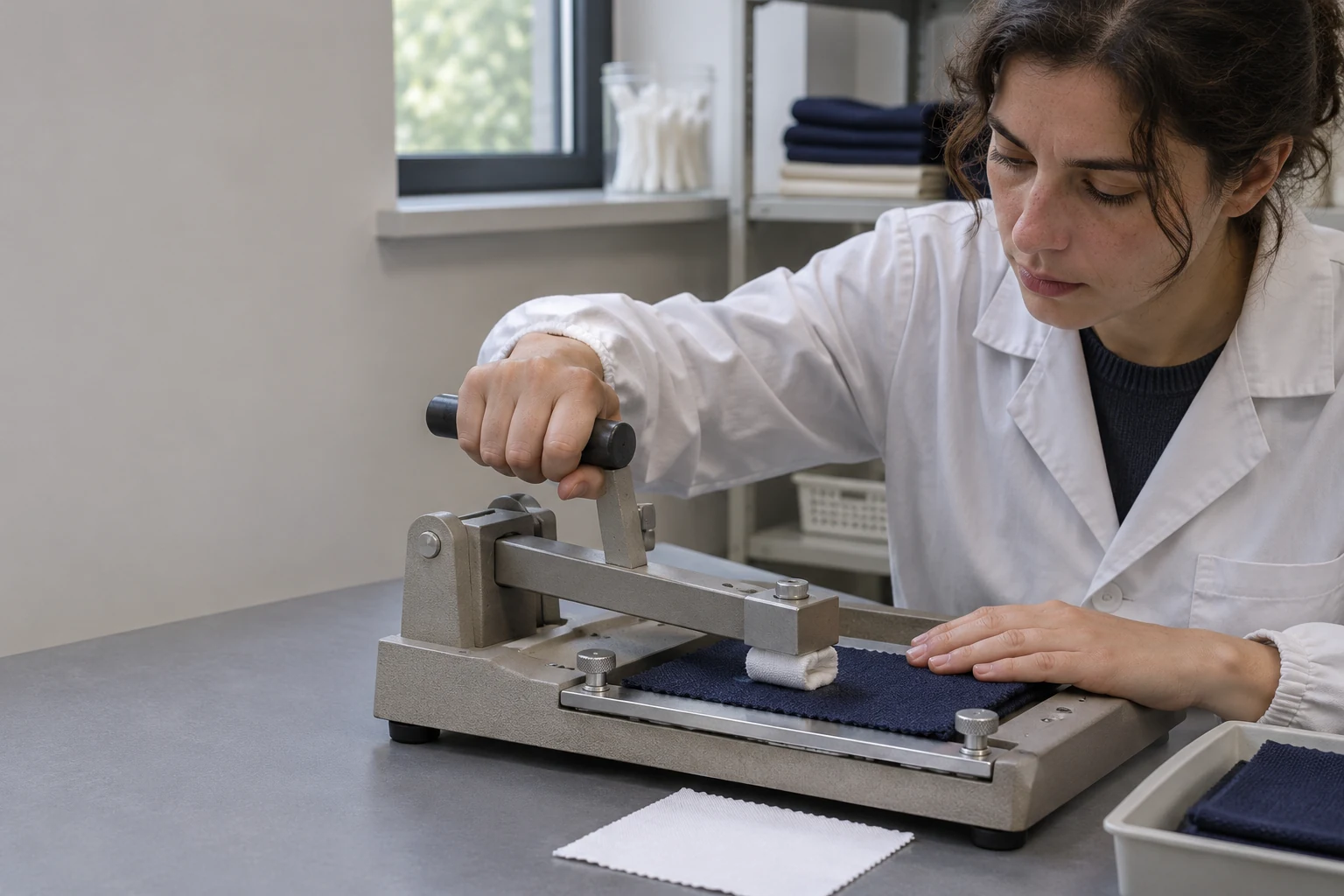
Rubbing tests may assess dry and wet conditions. Results can differ, so a dry rubbing result should not silently stand in for a wet one. AATCC's directory identifies crocking methods separately from other colorfastness methods. The laboratory should select the appropriate method and edition rather than having the purchase team improvise a test procedure.
Test representative materials and colors
A report for one pale cotton fabric is not evidence for every dark shade, blend or finish in an order. Discuss a risk-based sample selection with the testing provider. Identify the exact fabric, color, decoration and supplier reference on the submission. If material or dyeing changes after approval, decide whether the previous evidence still applies before accepting it.
Use the result to make an order decision
Agree the acceptance requirement before seeing the result. If the sample fails, document the proposed correction and any retest rather than changing the pass limit afterward. Review trims and decoration where they could stain or be stained. Testing should support the finished product promise and care instructions, not become an unrelated file attached to the order.
Questions buyers ask
Does a colorfastness report certify every product?
No. Review the sample identity, method, conditions and scope. Do not extend a result to untested products without a justified assessment.
Can I use one universal passing grade?
Not responsibly. The method, product, exposure and buyer requirements determine the acceptance criteria.
Prepare your quotation request
Share the product, composition, color range, care instructions and intended use. Include your retailer or brand test protocol if available, and ask for testing costs and timing to be stated separately from production.
Related products and planning guides
Reference: AATCC colorfastness test method directory. Product availability and project requirements are confirmed in your quotation.