




Garment Spec Sheet: Points of Measure, Tolerances and a T-Shirt Example
Create a usable garment measurement sheet with clear points of measure, units, tolerances and revision control.
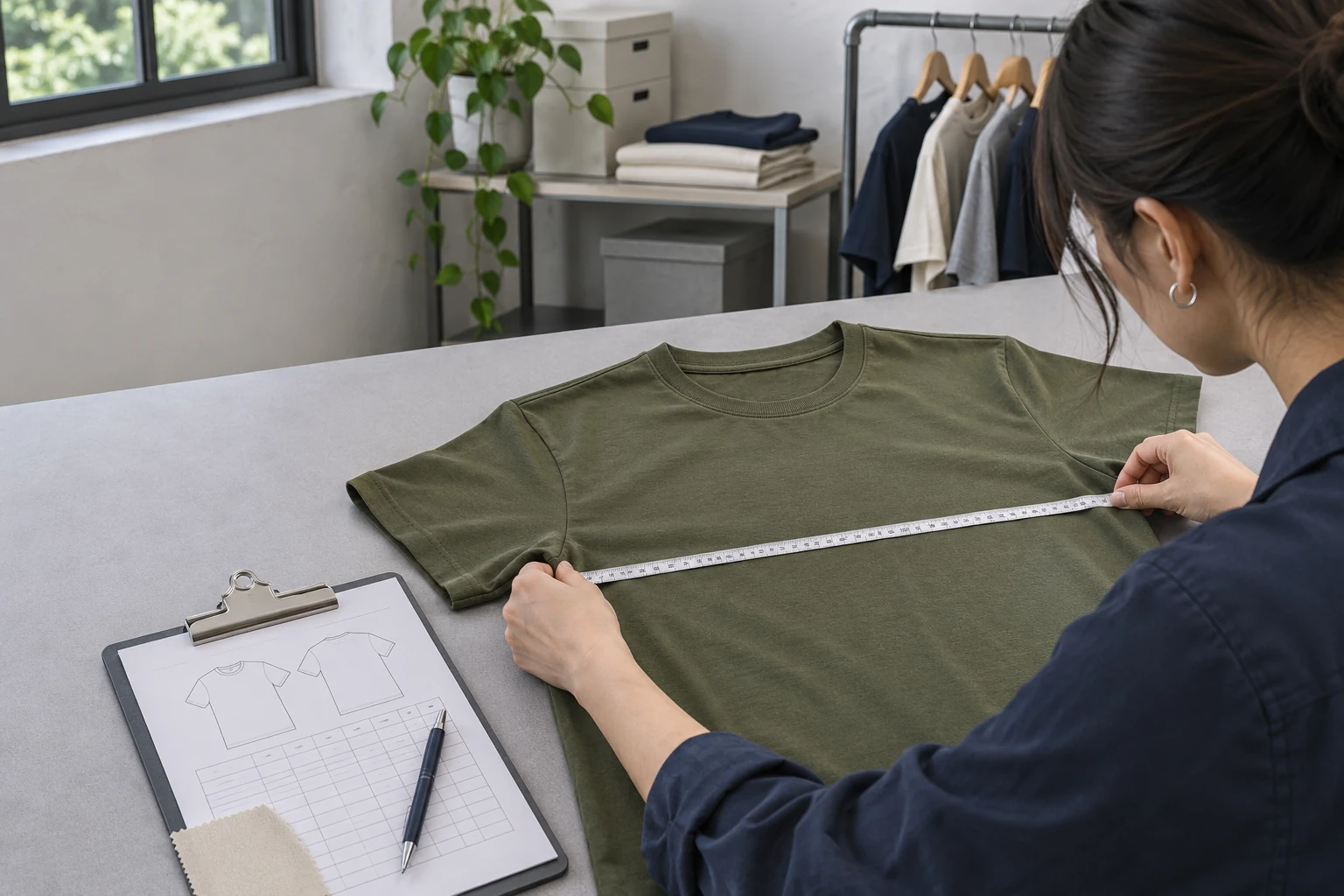
A garment spec sheet turns fit requirements into measurable instructions. It normally sits within a broader tech pack, alongside materials, construction and artwork information. Its value depends on whether two people can measure the same garment in the same way and reach a comparable result.
Define each point of measure
A point of measure, or POM, needs a name and an unambiguous method. 'Chest' could mean body circumference, garment circumference or a flat half-chest measurement. Use a diagram and state the exact start and finish points. For curved areas, explain whether the tape follows the curve or measures a straight line. Specify whether the garment lies relaxed or under a defined tension.
Separate target dimensions from tolerances
The target is the intended measurement; the tolerance is the agreed allowable variation. Do not use a tolerance to hide an unresolved fit decision. Different points may need different tolerances based on function and production capability. Have the supplier review feasibility, then record the agreement before samples are judged or bulk inspection begins.
| Example POM | Method to define | Additional field |
|---|---|---|
| Half chest | Flat side-to-side at specified position | Target and tolerance per size |
| Body length | Agreed shoulder or neck reference to hem | State front or back |
| Sleeve length | Specified seam point to sleeve edge | Follow agreed measuring line |
| Neck opening | Defined edge-to-edge reference | Relaxed condition |
Build a practical T-shirt sheet
Start with measurements that control the silhouette and fit: half chest, body length, shoulder width, sleeve length and relevant opening dimensions. Add construction-dependent points rather than copying every field from an unrelated garment. The example below defines fields, not production values. Populate the actual targets from your approved design and fit work.
Record the condition of measurement
A garment measured immediately after unpacking may not be directly comparable to one measured after laundering and conditioning. Define the measurement stage and any preparation. Keep before-care and after-care results distinct. If the product stretches, use an agreed relaxed measurement method unless a specific stretched measurement is required.
Control revisions and sample comments
Give the sheet a style identifier, date, revision number and size coverage. Record actual sample measurements beside targets and distinguish a measurement discrepancy from a requested design change. Once approved, distribute the same revision to development, production and inspection. An old spreadsheet attached to a later email can otherwise become the accidental production reference.
Questions buyers ask
Is a spec sheet the same as a tech pack?
No. A measurement sheet is one part of the broader manufacturing information in a tech pack.
Can every measurement use the same tolerance?
That should not be assumed. Agree tolerances according to the measurement point, design and production process.
Prepare your quotation request
Send a diagrammed measurement sheet, size range, fit reference and current revision. Identify any missing targets explicitly so development work can be quoted instead of leaving the factory to guess.
Related products and planning guides
Reference: Techpacker garment specification sheets. Product availability and project requirements are confirmed in your quotation.