




Rhinestone Size Chart: SS Sizes, Millimeters and Choosing Sizes for Apparel
Read SS size codes, compare millimeter ranges and choose stones around artwork detail, garment scale and sampling.
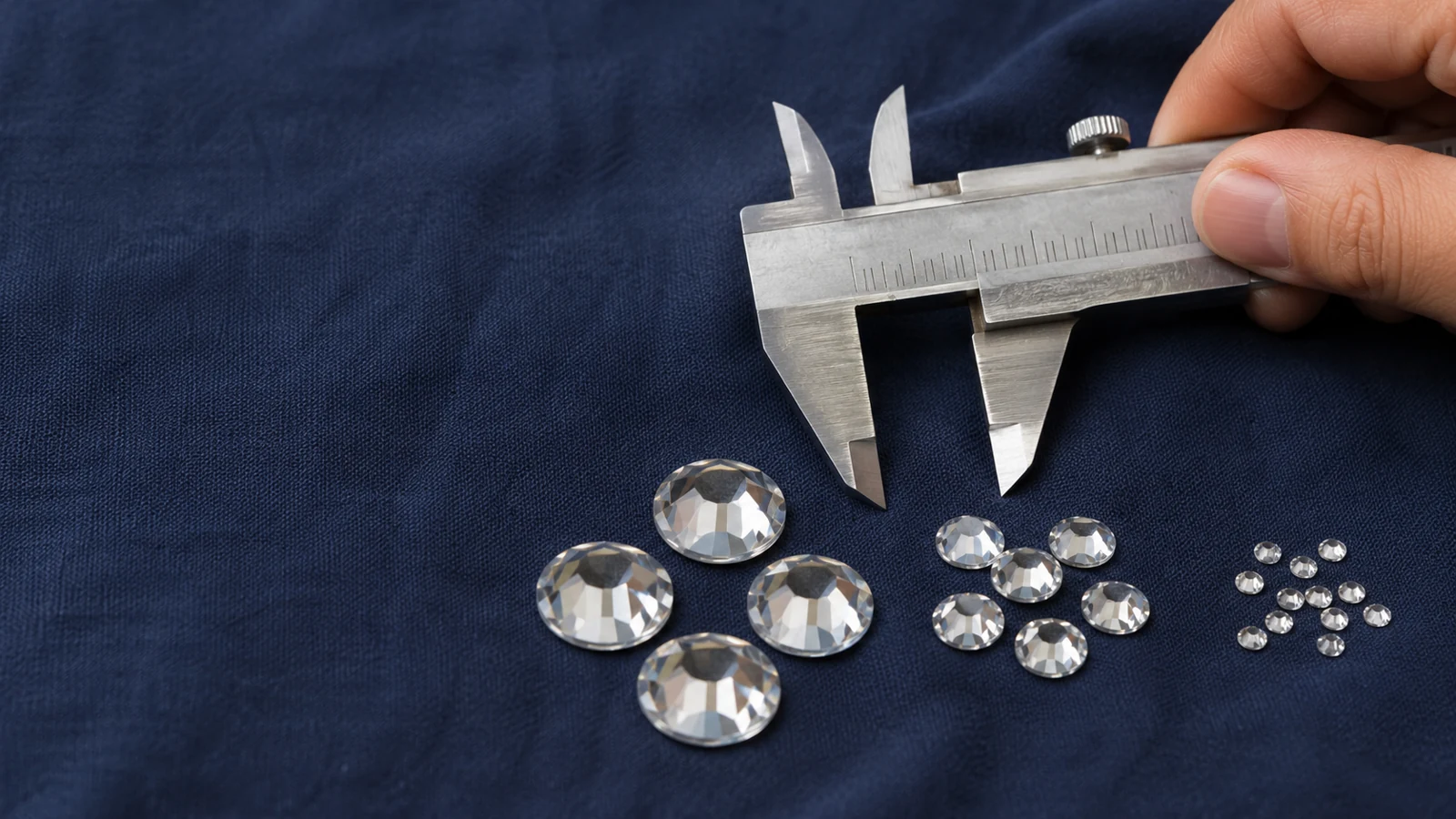
Rhinestone size affects more than sparkle. It changes the spacing, edge definition and overall character of a motif. Before requesting a decorated garment, identify the stone size system and check the supplier’s actual component specification.
Round flatback rhinestone size chart
The reference ranges below come from Preciosa’s published flatback conversion table. They are useful for planning, but other components or suppliers may use different nominal descriptions. Confirm the selected product before approving artwork.
| SS code | Published diameter range | Planning consideration |
|---|---|---|
| SS6 | 1.90–2.10 mm | Small-scale detail and closely spaced motifs |
| SS8 | 2.30–2.50 mm | Fine outlines and smaller decorative elements |
| SS10 | 2.70–2.90 mm | A middle option for detailed apparel artwork |
| SS12 | 3.00–3.20 mm | More visible individual stones |
| SS16 | 3.80–4.00 mm | Larger outlines or mixed-size accents |
| SS20 | 4.60–4.80 mm | Bolder elements with more space between details |
| SS30 | 6.30–6.50 mm | Large accents requiring a suitable layout |
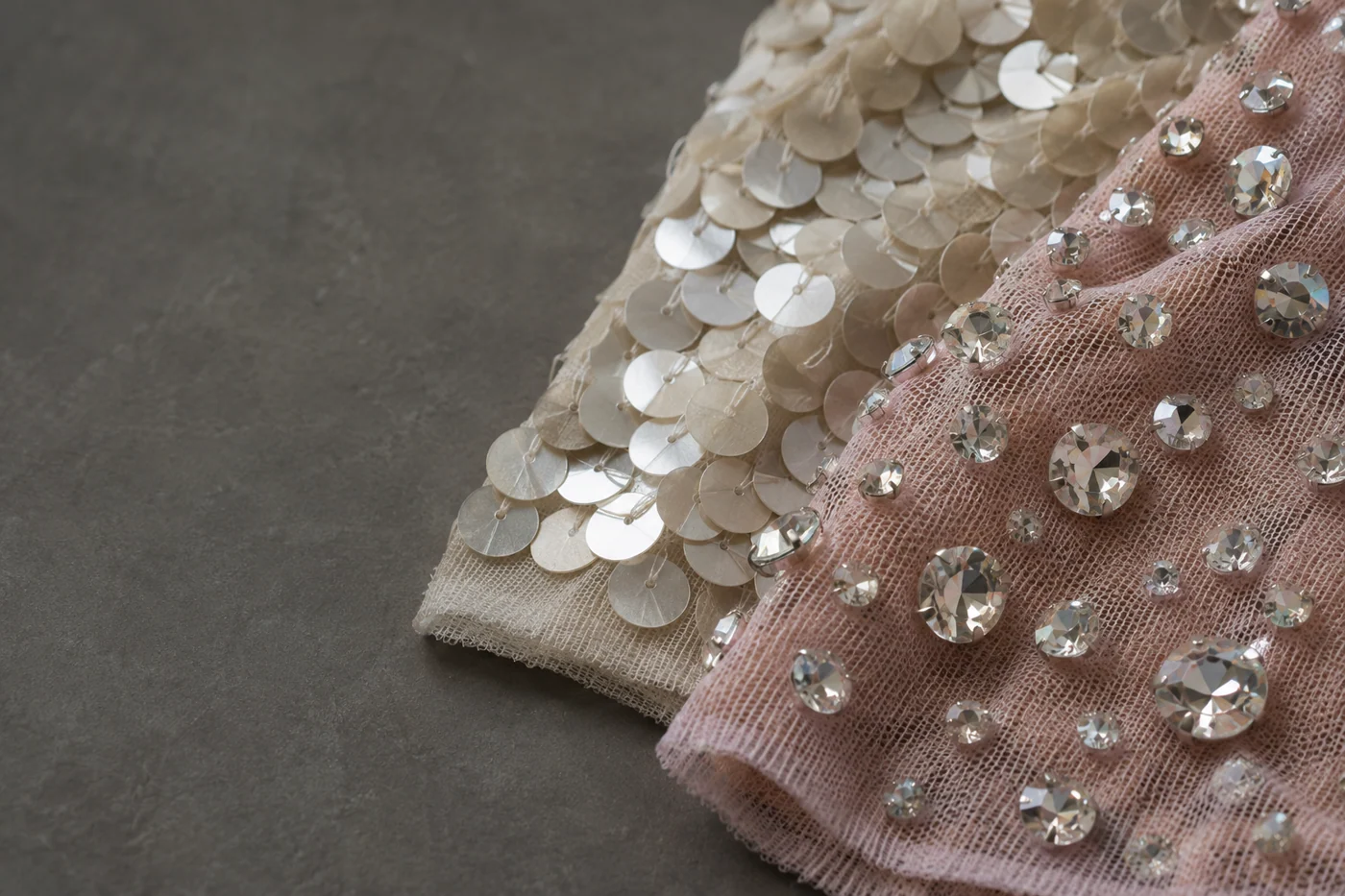
The planning column is design guidance, not a manufacturer performance specification. The header photograph is not a scale reference. Use physical samples and the published measurements when selecting components.
Choose the artwork size before the stone size
Set the finished width and height of the motif on the garment. Then review whether its letters, curves and narrow gaps can be represented with the proposed stones. Increasing stone size without changing the layout can make small spaces close up or reduce the clarity of a letter.
Print the artwork at actual size and place it on the garment. Review it both close up and from the distance at which it will normally be seen. A design that looks balanced on a large screen may feel too dense on a small chest placement.
SS16 versus SS20: what changes?
Using the table above, SS20 has a larger diameter than SS16. It therefore takes more space per stone before any gap is added. Do not swap one for the other on a one-for-one basis without checking the complete motif.
As a simple layout calculation, a line of ten stones at a nominal 4 mm diameter with nine 1 mm gaps spans about 49 mm. Ten at a nominal 4.7 mm with the same gaps span about 56 mm. This is a planning example, not an exact production dimension; actual component size and layout must be confirmed.
Check the garment and attachment method
Stone diameter does not tell you whether the component is suitable for a particular fabric or application. Identify whether the item is hotfix, non-hotfix or another construction, and follow the selected component’s application guidance. The fabric and intended care conditions also matter.
- Provide the garment material and construction reference.
- Specify stone type, size, color and supplier reference where known.
- Show the finished motif dimensions and placement.
- Ask for a decorated sample before approving the bulk layout.
Size selection questions
Can I mix stone sizes?
Yes, as a design choice, but identify each size in the artwork specification. Review the arrangement in a sample instead of leaving size substitution to interpretation.
Are SS and millimeter labels interchangeable?
No. Record both where available, along with the exact component reference. Shaped stones are often described by their dimensions rather than the round-stone SS code.
Explore rhinestone customization capabilities and add the final component choices to your garment tech pack.
Further reading: Preciosa: Crystal Components Product Overview, flatback size tables.