




Bill of Materials for Clothing: Build a Component-Level Order Sheet
Record the exact combination of fabric, trims, decoration and labeling that makes up each apparel variant.
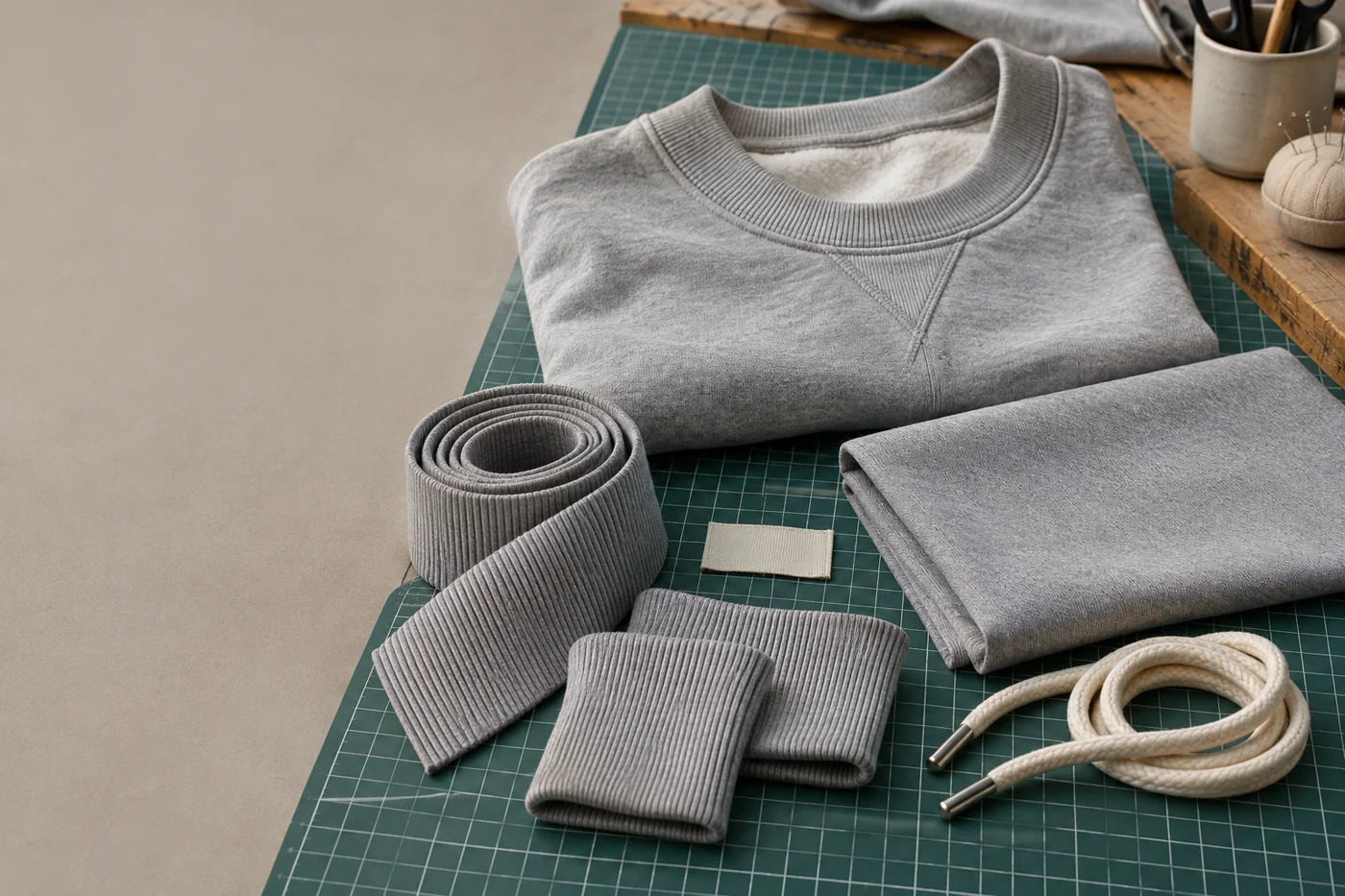
A clothing bill of materials (BOM) identifies what goes into a garment or selling unit. It answers a narrower question than the full tech pack. A technical drawing may show a chest motif and a hem label; the BOM says which motif, label and base material to purchase or use for each colorway.
Give every component a reference and a unit
Start with shell, lining and rib where applicable, then list trims such as thread, cord, labels, decoration and agreed packaging. Use the unit in which each component is counted or consumed: fabric by length or mass, labels by piece, a left-and-right decoration by pair if that is how it is supplied. Avoid mixing a quantity of finished garments with a fabric allowance on the same line. Show whether a quantity is for each unit, each sellable set or each carton.
| Item | Record on its own row | Common ambiguity |
|---|---|---|
| Base fabric | Approved material ID, colorway and consumption unit | A named color with no approved swatch or roll reference. |
| Chest decoration | Artwork revision, finished size and supplied unit | A sheet count mistaken for the number of motifs. |
| Size label | Label artwork ID and size-dependent mapping | One reference reused for all sizes without a printed size rule. |
| Retail pack | Pieces per pack and accessory inserts | “One set” without a list of its contents. |
See the apparel collection and transfer collection as references for identifying garment and decoration separately.
Use one row for each real substitution
A navy version might use the same shirt body pattern as the white version but different thread, backing and label artwork. Use a colorway column or separate variant rows so a purchasing team can issue the right quantities. Put “approved alternative only” next to critical parts and identify who can accept changes. If a substitute shifts appearance or care, update the sample approval as well as the purchasing record.
Check the order against the approved BOM
Open a sample and account for each item on the sheet. Confirm that quantities for garment variants add to the proposed order. If a transfer is sold as one carrier with several designs, establish the number of usable placements per carrier before ordering. Attach the reviewed BOM revision to the RFQ, then keep it alongside the full technical pack, rather than treating one as a replacement for the other.
Discuss components for a custom order
Reference: Alan King Group’s bill of materials guide.