




Cut-and-Sew Manufacturing vs Decorating Blanks: A Buyer’s Decision Guide
Decide whether your clothing project needs custom garment construction or an existing blank, and compare the development and order implications.
A custom logo does not automatically require a custom-built garment. Decorating an existing blank and developing a cut-and-sew style solve different problems. The right route depends on how much you need to change the fit, fabric, construction and branding—not simply whether the order is called custom.
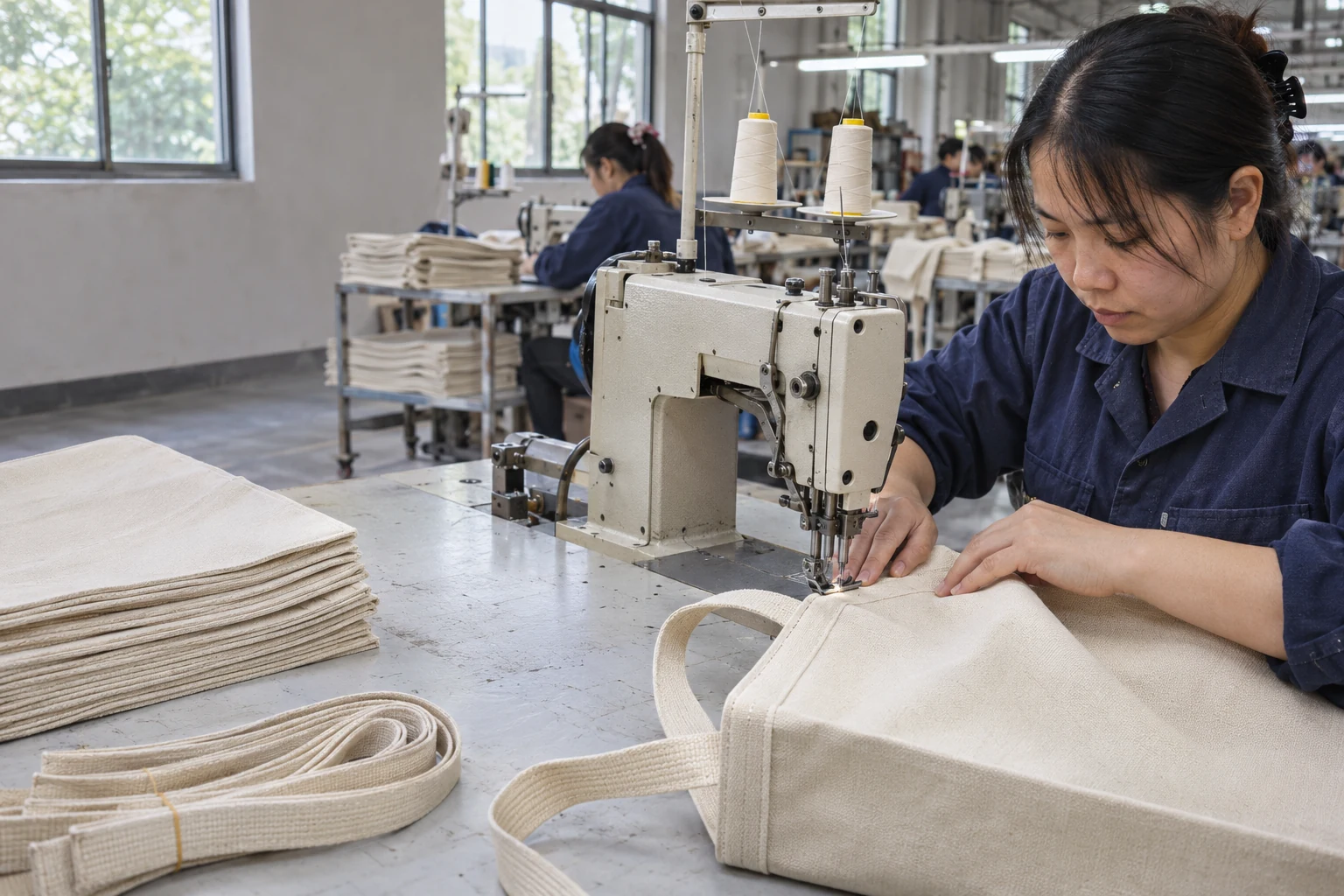
Canvas totes follow the same decision: decorate an existing bag when its dimensions, fabric and handles suit the brief, or develop a sewn style for a different gusset, lining, pocket or handle construction. The sewing image shows this bag-development route.
Identify what must be unique
If an existing garment meets the required fit, fabric and construction, decoration and suitable branding may be enough. If the project needs a specific silhouette, unusual paneling or a material unavailable in a suitable blank, cut-and-sew development may be appropriate. List the non-negotiable product details first. This prevents paying for development that does not improve the customer-facing result.
Understand the development work
A new cut-and-sew style can involve patterns, grading, material sourcing, construction samples and fit revisions. Existing blanks reduce some of those tasks, but still need verification for decoration compatibility and availability. Neither route eliminates sampling. A blank approved without decoration is not yet proof that the final branded garment will meet your requirements.
| Requirement | Route to investigate |
|---|---|
| Existing fit and fabric are suitable | Decorated blank |
| New silhouette or construction | Cut-and-sew development |
| Uncertain initial demand | Compare existing options and development costs |
| Long-term repeat line | Check continuity under either route |
Ask about minimums at the right level
Minimum order quantity may depend on garment style, color, fabric or decoration setup. A small finished order can still face a higher material minimum. Ask whether unused material, stock fabrics or existing blocks change the options. Do not assume 'low minimum' means every color, size and customization is available at the same quantity.
Compare the complete timeline
For cut-and-sew, include development, approvals, material lead times and bulk production. For blanks, confirm stock availability and any replenishment risk as well as decoration time. A quoted production window may start only after approvals and inputs are complete. Ask what triggers the schedule and what could change it.
Plan repeat orders before launch
An existing blank may change or become unavailable; a custom style needs controlled files and material references for repeat production. Ask how the garment specification and artwork will be retained. If continuity is important, discuss substitute approval and reorder planning early. Avoid basing a long-term collection solely on a one-time sample without an agreed repeat-order process.
Questions buyers ask
Can a blank carry my own branding?
Possibly, subject to the garment, supplier permissions, construction and applicable labeling requirements. Confirm the scope before ordering.
Is cut-and-sew always a large order?
No universal minimum applies. Material, process and supplier economics determine the feasible quantity and price.
Prepare your quotation request
Send a reference product and separate required changes from optional preferences. Include your first-order quantity, likely repeat needs, size mix, artwork and destination. Request clearly scoped alternatives if either route could work.
Related products and planning guides
Reference: Techpacker clothing manufacturing overview. Product availability and project requirements are confirmed in your quotation.